

Not all duct cleaning is the same. The method a company uses determines how thoroughly your system gets cleaned, whether contaminants actually get removed or just moved around, and whether your ductwork comes out of the process in good condition. Understanding the difference helps you make a better decision and spot providers who aren't doing the job properly.
Our team at Air Duct Cleaning in Raleigh, NC uses professional-grade equipment and follows NADCA standards on every job. Here's what those standards actually mean in practice, and how each method stacks up.
The Two Things Every Duct Cleaning Must Do
Before getting into specific methods, it helps to understand what any legitimate duct cleaning is trying to accomplish. According to NADCA, professional duct cleaning has two core requirements regardless of which tools or techniques are used.
Agitation: Contaminants stuck to duct surfaces need to be physically loosened before they can be removed. Dust, debris, and buildup that has been sitting inside ducts for years doesn't come free on its own. Agitation tools like brushes, air whips, and compressed air nozzles break that buildup loose so it can be collected.
Collection: Once contaminants are airborne or loosened, they need to be captured and removed from the home entirely. This is where negative air pressure comes in. The entire system is placed under continuous vacuum so that loosened particles get pulled out rather than redistributed into your living space.
Any cleaning method that skips or shortcuts either of these steps leaves contaminants behind. That's what separates a real cleaning from the kind of low-cost jobs that don't deliver results.
The 5 Main Duct Cleaning Methods
Negative Air Pressure
This is the gold standard. A powerful vacuum unit, either truck-mounted or portable, creates continuous negative pressure throughout the entire duct system. Technicians use agitation tools through the vents while the vacuum pulls everything loose toward a collection point and out of the home.
The reason this method leads is containment. Because the system stays under negative pressure throughout the process, loosened contaminants can't become airborne in your living space. Everything gets captured. It works on all duct types and handles heavy contamination without spreading it.
Air Sweep or Whip Method
This method uses a flexible rotating brush or whip inserted into the ductwork to agitate debris while compressed air pushes contaminants toward a vacuum hose. It's effective for breaking up buildup and works well in combination with negative air pressure as the collection component.
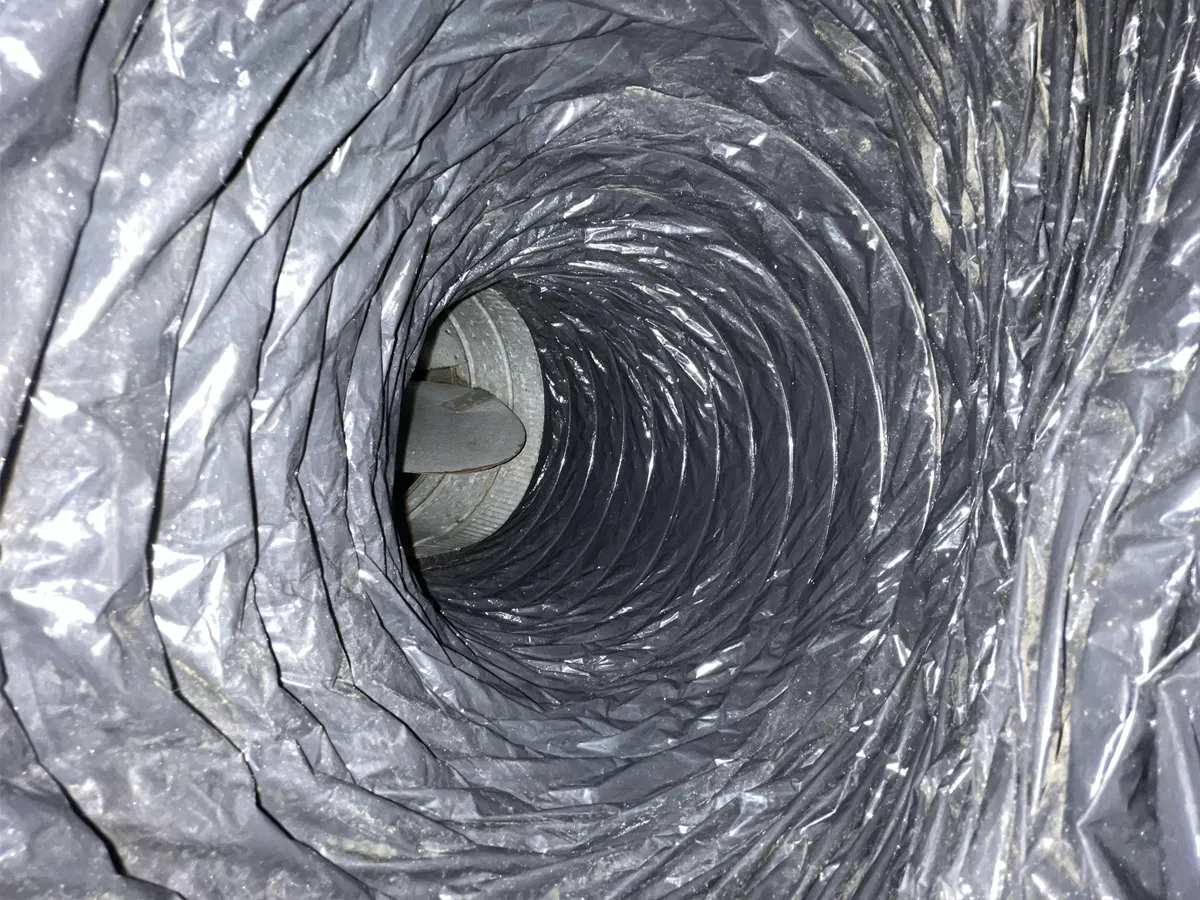
One limitation: it requires more care in homes with flex ductwork, which is common in North Carolina homes built after the 1980s. The rotating action can damage flex duct material if not handled carefully.
High-Pressure Air Washing
Compressed air is used to create a powerful stream that dislodges contaminants from duct surfaces and pushes them toward a collection point. This method works well for targeted areas and hard-to-reach sections of a duct system but is less effective as a standalone approach for heavily contaminated systems.
Mechanical Agitation or Rotary Brushing
Specialized brushes and mechanical tools scrub the interior surfaces of the ductwork to break up buildup, followed by contact vacuuming to extract what's been loosened. This approach works well for targeted cleaning in specific sections and pairs effectively with negative air pressure for whole-system jobs.
It's particularly useful in older metal duct systems where buildup has hardened over time, which is something our team sees regularly in older Durham and Chapel Hill homes.
Chemical Cleaning
Chemical solutions are applied to duct surfaces to break down organic matter and microbial growth. The EPA notes that antimicrobial treatments should only be applied after mechanical cleaning has been completed and only when there's a demonstrated need for them. They are not a substitute for physical cleaning.
Chemical cleaning is appropriate when mold or bacterial contamination is confirmed inside the duct system. Used correctly, it supports the mechanical cleaning process. Used as a shortcut instead of proper agitation and collection, it doesn't clean anything. If a provider leads with chemical treatment before doing any mechanical cleaning, that's a red flag.
Which Method Is Best and When
IY cleaning makes sense as light maintenance between professional jobs. For any situation involving mold, pests, heavy contamination, or post-renovation dust, professional cleaning with proper equipment is the right call. Disturbing mold or pest debris without containment spreads the problem rather than solving it.
For most North Carolina homes, the best approach combines negative air pressure as the collection method with agitation tools suited to the duct type. That combination covers the full system, contains contaminants, and works on both rigid metal and flex ductwork.
How North Carolina Homes Affect Which Method You Need
North Carolina's climate creates specific duct conditions that influence which cleaning approach is most appropriate. High humidity throughout the Triangle means moisture gets into duct systems faster than in drier states. That moisture, combined with long pollen seasons and the prevalence of crawlspace construction, produces contamination types that basic cleaning methods don't always address fully.
A few NC-specific factors worth knowing:
- Flex duct is common across Triangle-area homes built after the 1980s. Raleigh, Cary, and newer parts of Durham have a high proportion of flex duct systems that require gentler agitation methods to avoid tearing the material during cleaning.
- Older homes in Durham and Chapel Hill frequently have rigid metal duct systems that have gone decades without cleaning. These respond well to mechanical agitation combined with negative air pressure, but the buildup is often heavier and takes longer to clear properly.
- Crawlspace ductwork is found in a large share of North Carolina homes. Ducts running through crawlspaces are exposed to higher moisture levels, pests, and temperature swings that accelerate contamination. If your crawlspace has moisture issues, addressing them through crawl space encapsulation in North Carolina before or alongside duct cleaning keeps the problem from recurring.
- Mold is faster-moving here than in drier climates. When mold is found in a duct system, chemical treatment becomes a necessary part of the job rather than an optional add-on, and it needs to be paired with proper mold removal in North Carolina if contamination has spread beyond the ductwork itself.
DIY vs. Professional Duct Cleaning
It's possible to clean the accessible ends of your ducts yourself using a shop vacuum and vent brushes. The honest limitation is that DIY cleaning reaches roughly the last 10 feet of each duct run. The majority of the system, where most contamination actually accumulates, stays untouched.
DIY cleaning makes sense as light maintenance between professional jobs. For any situation involving mold, pests, heavy contamination, or post-renovation dust, professional cleaning with proper equipment is the right call. Disturbing mold or pest debris without containment spreads the problem rather than solving it.
In many of these cases, homeowners also end up weighing whether duct cleaning is actually worth it based on cost versus expected benefit.
What Duct Cleaning Methods Cost in North Carolina
Method and contamination level are the two biggest drivers of cost in the Triangle market. Standard jobs on accessible systems with light buildup come in at the lower end. Jobs requiring specialized approaches for flex duct, crawlspace access, or contamination push the price up.
In cases where ductwork is severely damaged, deteriorating, or no longer safe to clean effectively, full system replacement may be a better long-term solution.
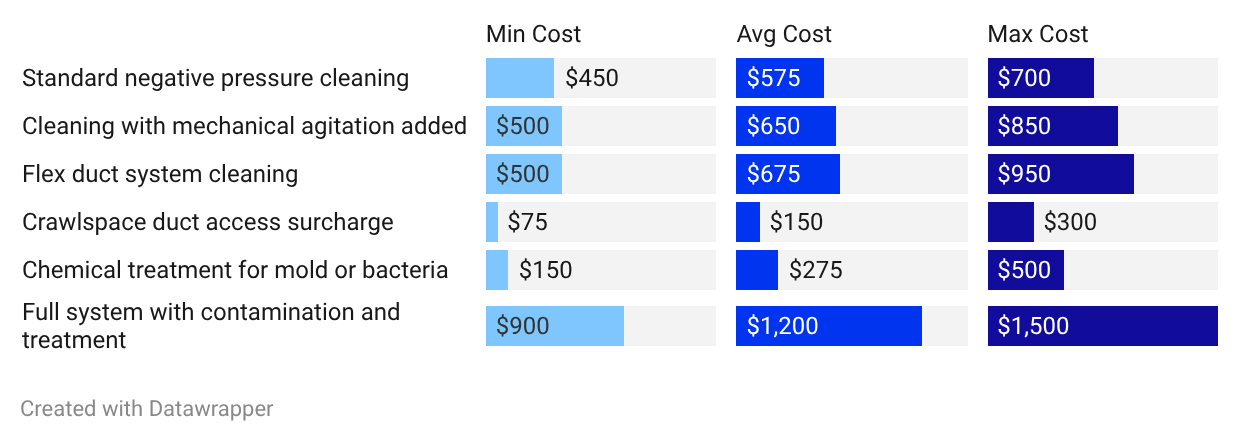
- Standard negative pressure cleaning costs $450 to $700. This covers a standard residential system with accessible ductwork and no significant contamination issues.
- Cleaning with mechanical agitation added costs $500 to $850. Adding rotary brushing or mechanical agitation to the negative pressure process is common in older homes where buildup has hardened onto duct surfaces over many years.
- Flex duct system cleaning costs $500 to $950. Flex duct requires more careful agitation to avoid damage, which adds time and requires specific tooling suited to the material.
- Crawlspace duct access adds $75 to $300. Low clearance and difficult access in crawlspaces slow the cleaning process and require extended equipment to reach ductwork properly.
- Chemical treatment for mold or bacteria costs $150 to $500 as an add-on. Applied after mechanical cleaning when contamination is confirmed, not as a substitute for proper cleaning.
- Full system cleaning with contamination and treatment costs $900 to $1,500.This covers homes where multiple factors combine: heavy buildup, mold or pest contamination, difficult access, and treatment requirements.
Frequently Asked Questions
What is the best method for cleaning air ducts?
Negative air pressure is the most effective method for whole-system cleaning. It combines continuous vacuum throughout the duct system with agitation tools that loosen buildup, and the negative pressure environment prevents contaminants from becoming airborne in your home during the process. Most professional jobs use negative air pressure as the foundation and add agitation methods based on duct type and contamination level.
How long does professional duct cleaning take in North Carolina?
Most residential jobs in the Triangle take three to eight hours depending on home size, duct type, and contamination level. Homes with crawlspace ductwork, flex duct systems, or significant contamination sit toward the higher end of that range.
Is negative air pressure safe for flex ducts?
Yes, when used correctly. The vacuum itself doesn't damage flex duct. The agitation tools used alongside it need to be chosen carefully, since rotating brushes that work well in metal ducts can tear flex duct material. A technician familiar with flex duct systems adjusts the agitation approach accordingly.
Should chemical treatment be part of every duct cleaning?
No. Chemical antimicrobial treatments are appropriate when mold or bacterial contamination is confirmed inside the system. They should always be applied after mechanical cleaning, not instead of it. A provider who recommends chemical treatment on every job regardless of system condition is upselling rather than responding to what the system actually needs.
Can duct cleaning spread mold if done incorrectly?
Yes. Disturbing mold inside ductwork without proper containment releases spores into the air and can spread contamination to areas of the system that weren't previously affected. Proper negative air pressure containment throughout the cleaning process prevents this. If mold is present in your system, make sure the provider uses full containment before any agitation begins.
How often should North Carolina homeowners have their ducts cleaned?
Every three to five years for most homes. North Carolina's humidity and long pollen seasons mean ducts here accumulate contamination faster than in drier climates, so leaning toward three years makes sense for homes with allergy sufferers, pets, or crawlspace ductwork. An annual inspection lets you base the timing on actual system condition rather than a fixed schedule.
Ready to schedule a cleaning or find out what method your system needs? Contact us and our team will assess your system and give you a straight recommendation.